Trying Michelin-Inspired Cantonese Lunch at CANTON8 Ginza, Tokyo
※ You can switch language or view all articles below
Language switching for this article / 言語切替
List of English restaurant review articles / 飲食店記事一覧
▶ Restaurant Information
Restaurant Name: CANTON8 Ginza
Japanese Name: CANTON8 銀座
Genre: Cantonese Cuisine / Dim Sum / Chinese Restaurant
Area: Ginza, Tokyo
Features: Michelin-inspired Cantonese cuisine from Shanghai, stylish modern interior, popular lunch spot, dim sum and mapo tofu
Originally, I was supposed to visit a completely different restaurant that day. But while sitting on the train scrolling through social media, CANTON8 Ginza suddenly appeared on my feed again and again. You know that feeling when an algorithm keeps pushing a place at you so aggressively that eventually you just give up and say, “Fine. Let’s go.”
That was basically me that afternoon.
The restaurant claims to recreate the flavors of the Michelin two-star Cantonese restaurant from Shanghai. And honestly, that wording immediately made me suspicious in the modern SNS era.
“Recreate the taste.”
Why phrase it like that?
If it is directly connected to the original flagship restaurant, wouldn’t they simply say “the Shanghai flagship”? The wording made me wonder whether this was a separate business inspired by the original rather than the exact same operation.
Of course, AI summaries online don’t really help anymore either. Nowadays, AI often just collects random influencer comments and rewrites them into something that sounds authoritative. Sometimes correct, sometimes not. So at this point, I honestly had no idea what the exact relationship was between the Shanghai restaurant and the Tokyo branch.
Still, the place looked interesting enough to visit.
So after getting off at Ginza Station, I walked along the Hibiya train tracks toward Shimbashi. At some point I genuinely started wondering: “Am I still in Ginza? Or is this basically Shimbashi already?”
Then I arrived and immediately understood where I was.
Ah… it’s above Rigoletto Kitchen.
Now everything made sense.
I took the elevator up to the 8th floor around 1PM, thinking lunch hours would probably be calming down by then. Surprisingly, the place was still packed, and there was already a waiting line made mostly of reservation guests.
That actually raised my expectations a little. Sometimes when a restaurant has a wait even after peak lunch time, it feels promising.


The restaurant itself feels modern and stylish rather than overly formal. There seemed to be private rooms available as well, making it suitable for business lunches or small group dining. I got seated at a very comfortable table with a surprisingly wide view of the dining floor. Ironically, because the interior felt so open, I ended up not taking many photos inside.
Now for the food.
The first thing served was corn soup.
And honestly?
It was excellent.
It had a thick texture somewhere between classic Chinese-style soup and the sweet corn soup many Japanese people are familiar with. Not too heavy, not too light. Very comforting. Personally, this was one of my favorite dishes of the meal.
Then came the dim sum.
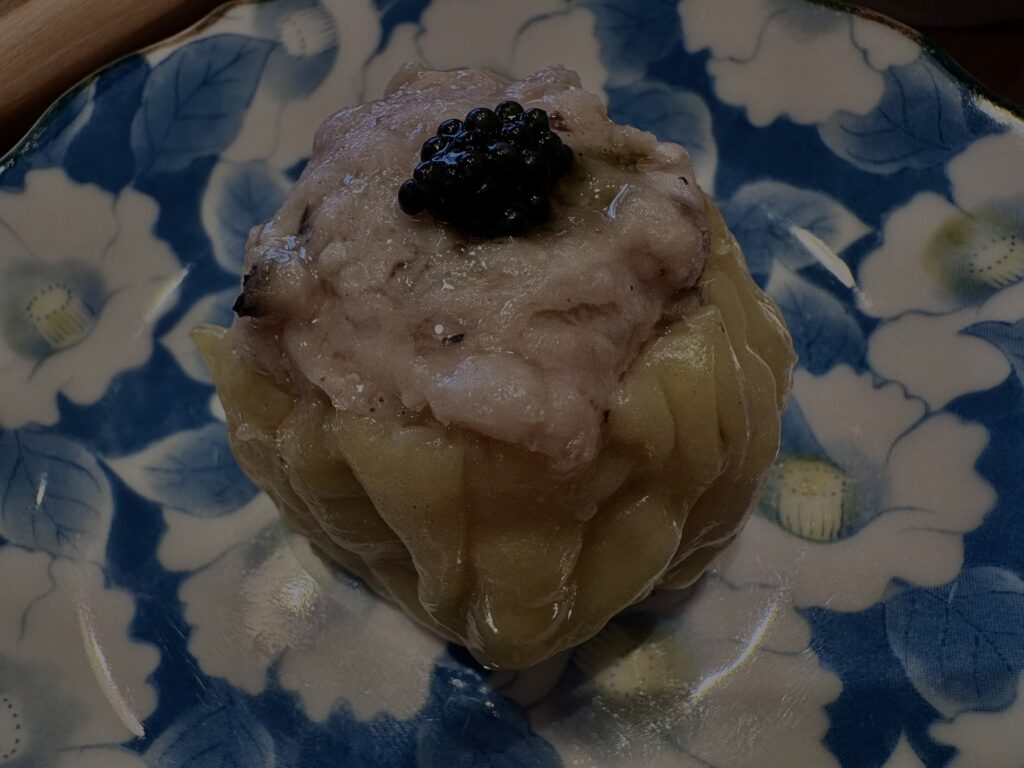
The staff mentioned “caviar.”
Wait… caviar?
I definitely heard the word correctly, but my brain still needed a second to process it.
The shumai itself was extremely meaty. There was shrimp inside, but the overall texture leaned heavily toward rich pork flavor rather than delicate seafood-style dim sum. If you enjoy dense and juicy meat fillings, you’ll probably like this version a lot.
Then came the drool chicken.
Well… it was chicken.
Good chicken, but still chicken.
Maybe social media hype raised my expectations too high before arriving.
Next was the mapo tofu.
This one worked very well for Japanese tastes. The balance of Sichuan pepper and spiciness was present without becoming overwhelming. Compared to some intensely numbing Chinese-style mapo tofu restaurants, this version felt easier and more approachable for casual diners.
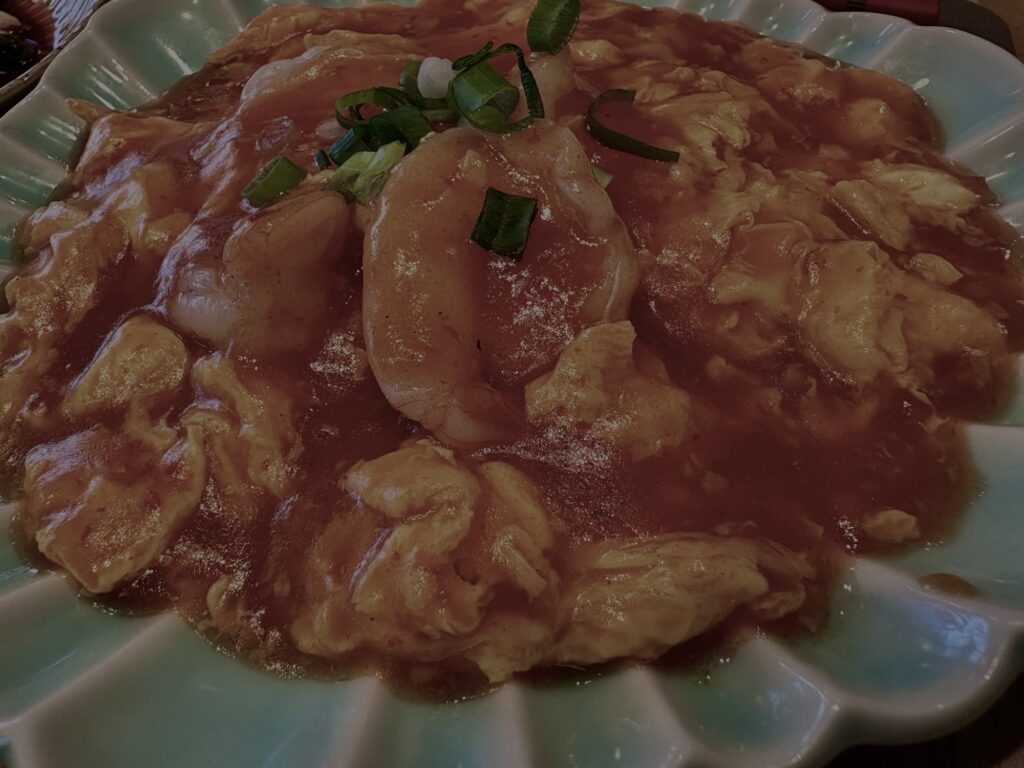
The shrimp chili dish was noticeably sweet. So if you dislike spicy food, this is probably a safe choice. However, if you belong to the “egg should never be inside shrimp chili” faction, this may not be your favorite style because the egg presence is fairly noticeable.
Rice refills were free for one additional serving, which honestly feels appreciated these days in Tokyo.
The course finished with a small dessert, giving the meal a clean ending without feeling overly heavy.


Overall, CANTON8 Ginza feels like one of those restaurants heavily powered by SNS visibility right now, but at the same time, the food quality and popularity suggest there is real substance behind the hype. Whether it perfectly reproduces the Shanghai Michelin experience or not, I honestly cannot say. But as a stylish Cantonese lunch spot in Ginza with approachable pricing and solid flavors, it definitely makes sense why the restaurant keeps appearing in short videos and social media feeds.
And honestly, sometimes curiosity alone is enough reason to visit a restaurant in Tokyo.





【Best restaurants in Japan review】。Alternatively, use the site search.